
CNY Goodies Review
How Many Calories Do the Classic CNY Goodies Contain?
Dec
In this guide
How many calories do CNY goodies contain? The useful answer starts with the portion. One tart, one wafer and one slice are not standard weights, and a generic snack estimate is not the nutrition value of every product with that name.
Below are three clearly sourced examples, followed by a method for reading the label on the pack you actually have. The examples are not measured values for Ding Bakery or CNYGoodies.sg products.
If you are comparing two snacks, first check whether the figures describe one piece, one serving or 100 g. Comparing different bases can make the numbers look more meaningful than they are.
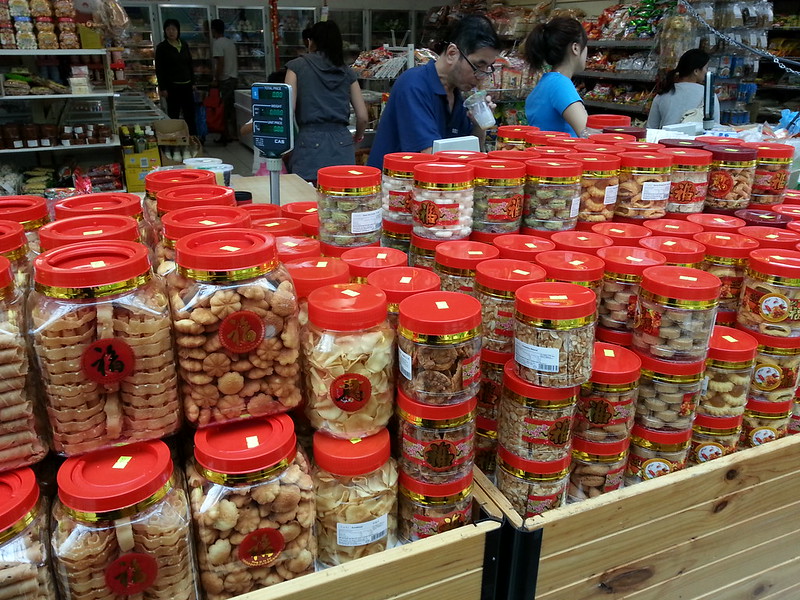
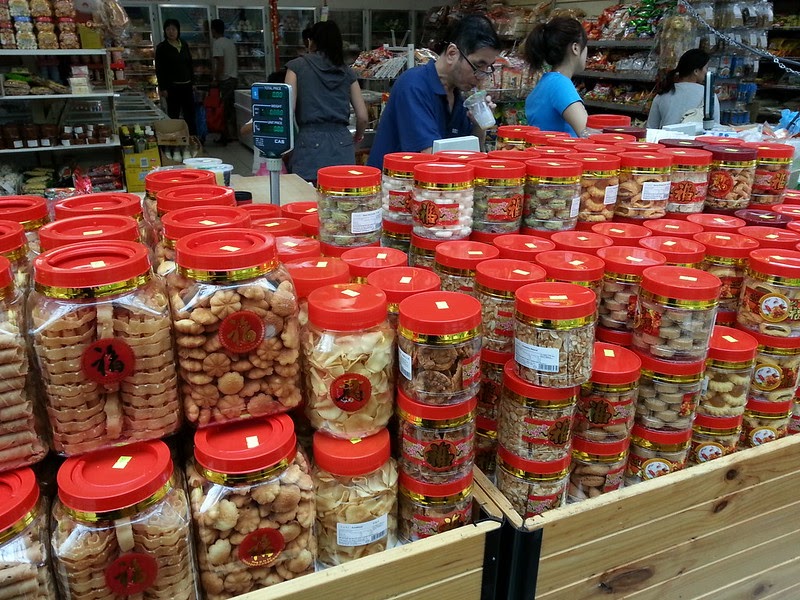
Source: Alpha@Flickr
What do calorie figures on a food label mean?
On a nutrition information panel, look for the energy value and its unit. For the examples in this guide, food calories are shown as kcal. Keep that unit attached to the number when you record or compare it.
HealthHub’s guide to reading food labels explains the information provided per serving or per 100 g/100 ml. The energy row is one part of that panel; an ingredient list or a product description does not supply an exact calorie value by itself.
This guide explains snack figures and portions. It does not set a daily calorie target or prescribe how much anyone should eat.
Calories in Your Favorite CNY Snacks
The following examples come from HealthHub’s festive-food article, contributed by the Health Promotion Board. The portion descriptions are kept as published.
| Snack | Source portion | Energy |
|---|---|---|
| Pineapple tart | 1 tart | About 82 kcal |
| Love letter | 1 love letter | About 56 kcal |
| Bak kwa | 1 slice | 370 kcal |
The source does not give a gram weight for these three portions in that article. A larger tart, a different slice or a filled wafer cannot be assigned the same value simply because its name is similar. This table also cannot be used to calculate calories per 100 g without a known portion weight.
Pineapple Tarts
Pineapple tarts may have an exposed filling or an enclosed pastry shape. For a product-specific calorie figure, use the nutrition information for that exact recipe and portion rather than applying the generic example above to every tart.
The French Butter Melt-in-Your-Mouth Pineapple Ball page describes one enclosed option. Its product name and photograph are not substitutes for a nutrition panel.
If you are baking at home, the homemade pineapple-tart recipe gives the ingredients and method. This calorie guide has not calculated that recipe’s nutritional value.
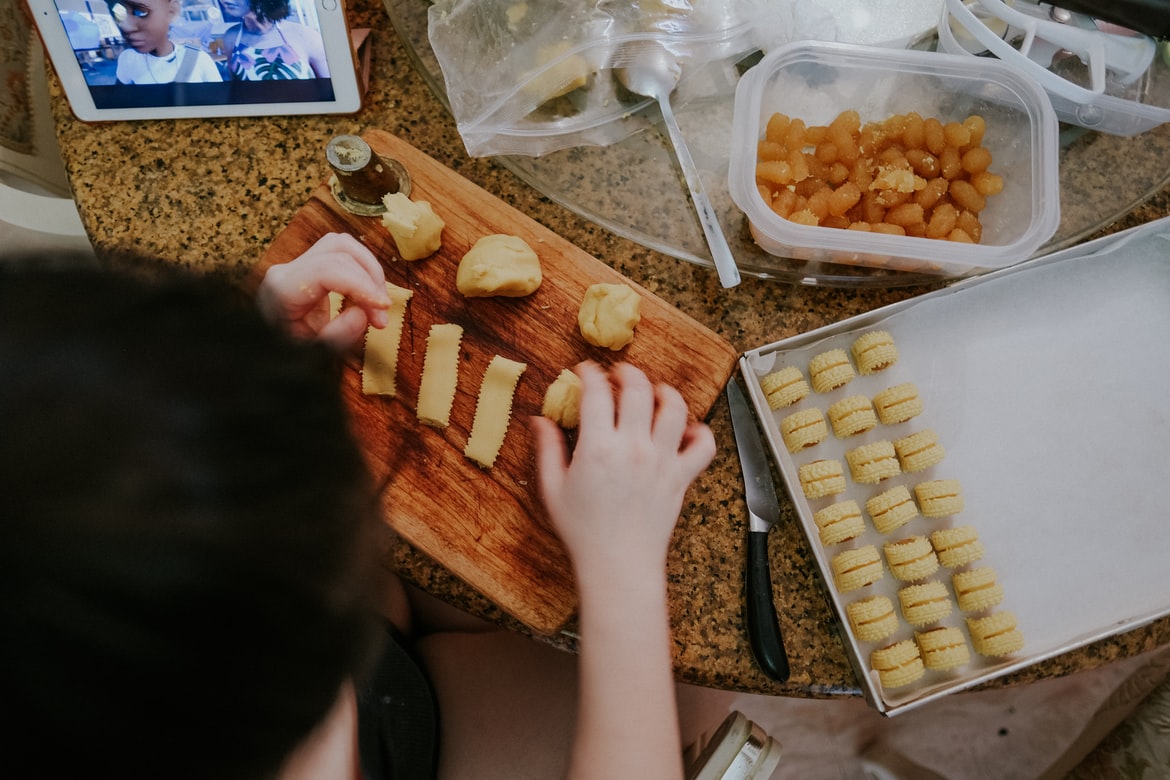
Source: Unsplash
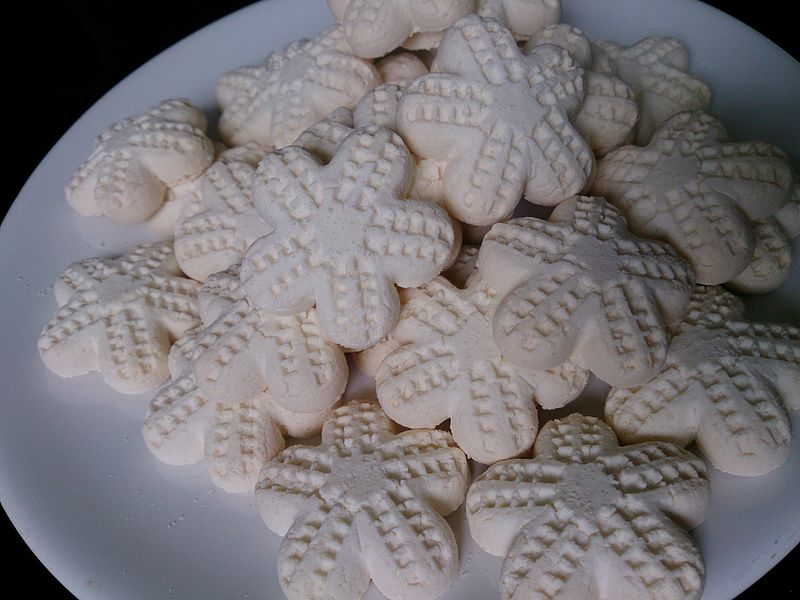
Kueh Bangkit
For kueh bangkit, check the serving description before using a per-piece number. A serving on the pack may contain more than one cookie, and the piece size may differ between products.
The HealthHub article used for the table does not provide a kueh bangkit calorie value. No universal per-piece figure is supplied here, and the snack is not ranked as lower in calories than all other CNY goodies.
Source: Wikimedia Commons
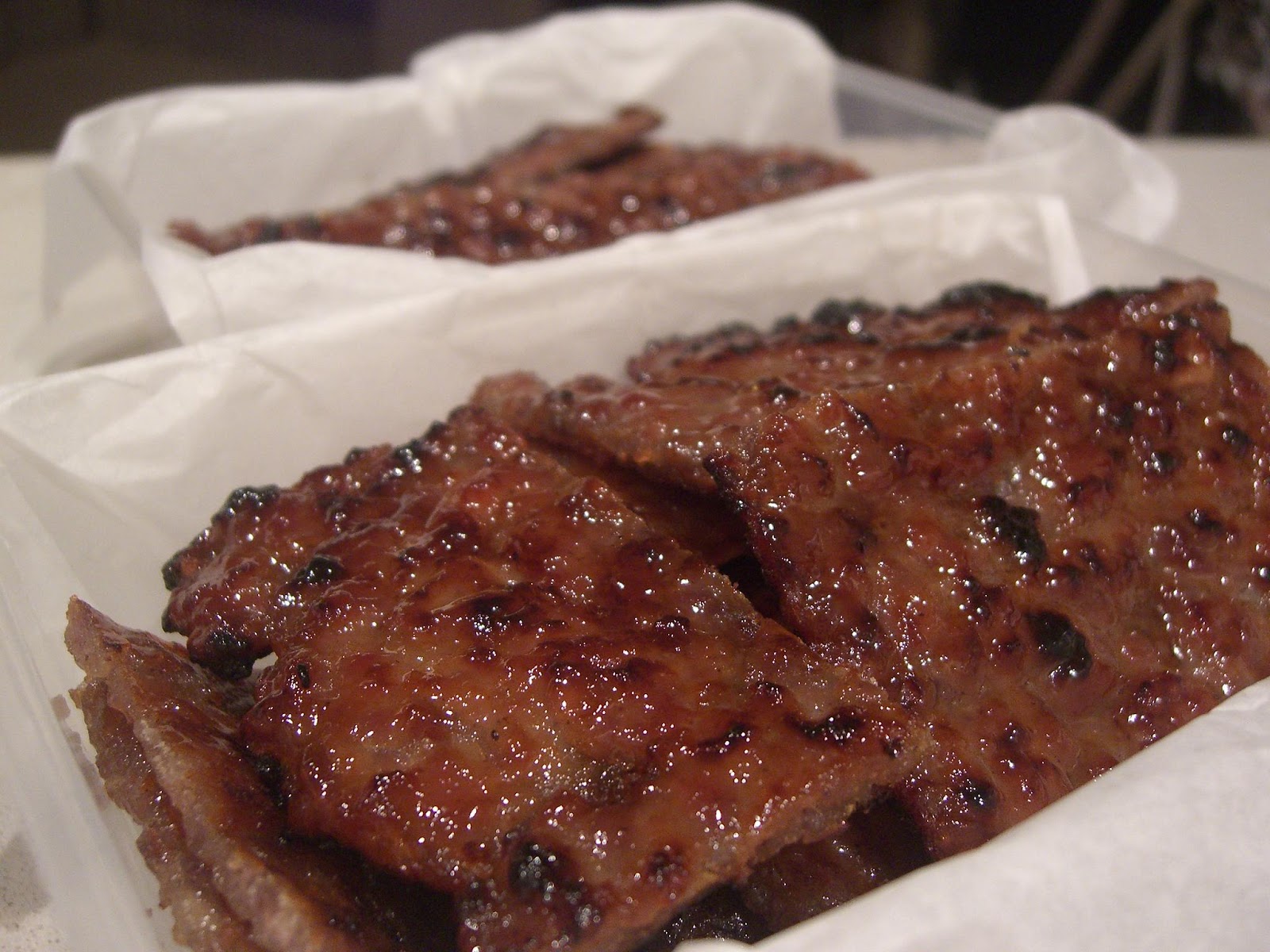
Bak Kwa
Bak kwa is commonly sold in slices, but the word slice does not establish a fixed weight. The table’s example refers to the portion used in the HealthHub article, not every full sheet, small cut piece or packaged serving.
Check the pack’s stated serving size. If the panel gives a value per 100 g, use the weight of the portion you are considering rather than estimating it from the slice’s length and width.
Source: Wikimedia Commons
Fried Crab Sticks
A fried crab-stick snack needs its own nutrition information. A figure for the ingredient before frying cannot automatically describe the finished snack, and one stick is not a reliable portion description for every product.
Look at the finished product’s panel and serving size, or ask its manufacturer for that information. There is no sourced, defined-portion value for fried crab sticks in the table above, so this guide does not attach a universal calorie count to them.
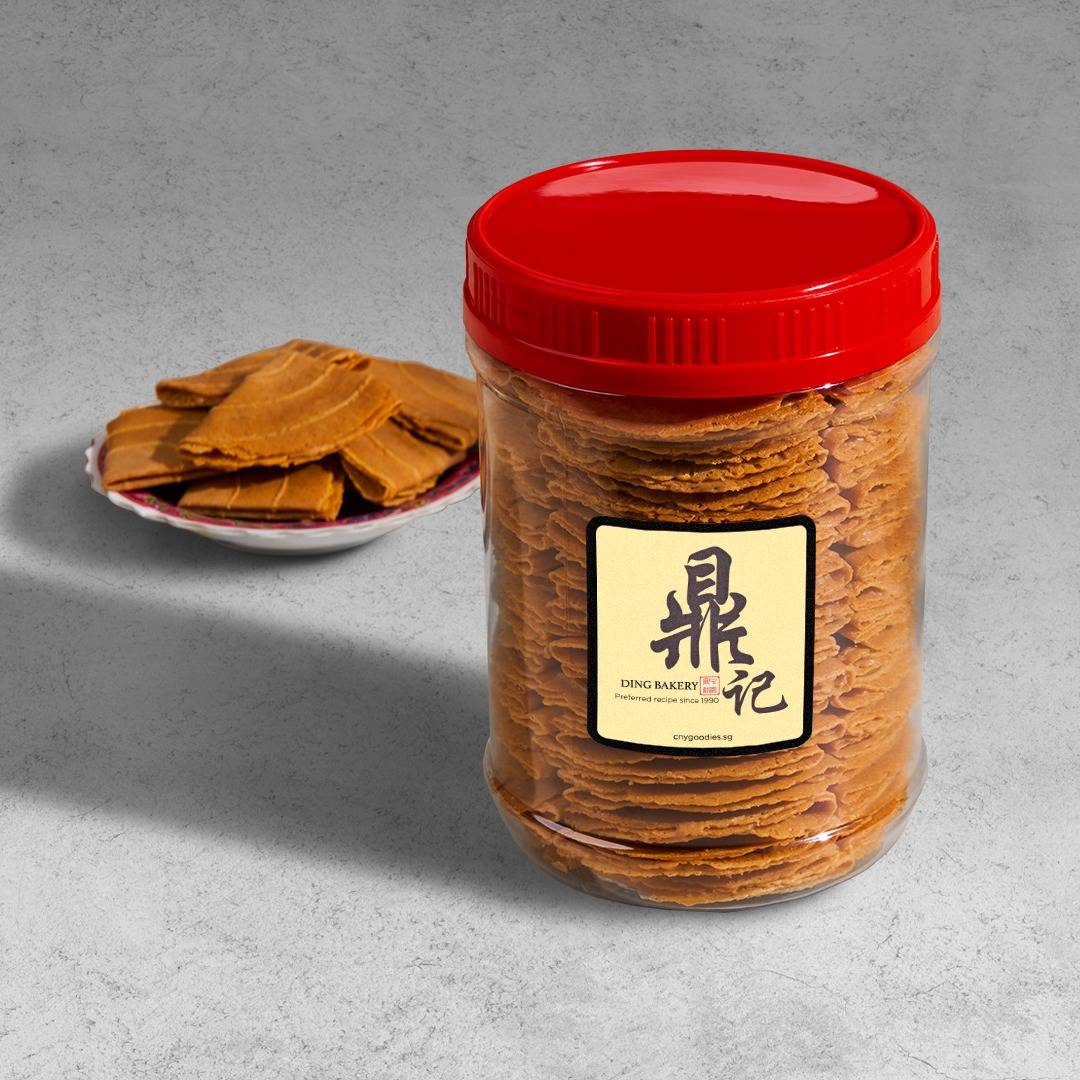
Love Letters
Check whether the nutrition information describes an unfilled wafer, a rolled product or a filled version. Do not assume a filling doubles the calories, or that every love letter has the same weight as the generic example.
Our homemade love-letters guide describes an unfilled home recipe. Peanut Folded Love Letters is a separate ready-made product. Neither link assigns the generic table value to that recipe or product.
Source: Ding Bakery
How to use the nutrition panel on your pack
HealthHub’s guide to reading nutrition labels, contributed by Ng Teng Fong General Hospital and Jurong Community Hospital, explains that serving sizes are defined by the manufacturer and can vary between products.
- Find the energy row. Note the value and unit, such as kcal.
- Read the column heading. Keep per serving separate from per 100 g.
- Check the serving description. See whether it states a weight, a number of pieces or both.
- Match the number to your portion. If you are using a per-serving figure, determine how many of those stated servings your portion represents.
- Use a common basis for comparisons. Per 100 g values allow comparison on the same weight basis; they do not tell you how much a particular piece weighs.
A clearly hypothetical calculation
Illustration only — these are not values from an actual product: imagine a pack lists 120 kcal per serving of three equal-sized cookies. Two of those cookies represent two-thirds of the listed serving.
120 × (2 ÷ 3) = 80 kcal for that illustrative portion.
This arithmetic is useful only when the serving information applies to the item being counted. It does not turn the generic examples above into verified data for another snack.
Common questions about CNY snack calories
Why do different guides give different numbers?
Check the source, recipe and portion description. A per-piece example without a weight is not directly interchangeable with a per-100 g figure. Different numbers should not be averaged into a supposedly exact value for your pack.
Can I use a plain love-letter figure for a filled version?
Not without nutrition information that applies to the filled product. Use its own panel or ask the manufacturer; this guide does not estimate a multiplier for fillings.
Does a serving mean the whole container?
No. The label may state several servings per pack. Read both the serving size and the number of servings before applying its energy value.
What if the pack has no calorie information?
Ask the manufacturer whether nutrition information is available for that exact product. A generic snack guide can provide context, but it cannot supply a verified product-specific figure.
Can a calorie figure tell me the sugar content?
No. For an actual sugar amount, read the relevant nutrient entry where it is declared. HealthHub’s food-label guide distinguishes nutrition information from ingredient lists and claims; a calorie total alone does not provide that breakdown.
Use the right number for the right snack
A clear calorie figure includes a source, a unit and a portion. Keep the three generic HealthHub examples separate from the nutrition information on your actual pack, and avoid filling missing values with guesses.
More CNY shopping guides
Make choosing, gifting and planning a little easier.
Best CNY Goodies for Gifting Family, Friends and Clients
Choose goodies for family visits, friends and business gifts.
Read guide
Budget CNY Goodies Singapore: Best Value Festive Snacks Without Compromising Taste
Compare your options and plan a selection around your budget.
Read guide
How Many Jars of Pineapple Tarts to Buy for CNY Visits in Singapore
Plan quantities for visiting, gifting and sharing at home.
Read guide
 WhatsApp Us Now